Call us now:

Choosing between low pile vs high pile carpet is not a style decision on a commercial project. Get it wrong and you’re staring at re-carpeting costs three years into a ten-year lease, a failed fire inspection, or a shipment stuck at customs because the fire rating documentation doesn’t match the spec sheet. This guide breaks down the engineering side of the decision — density, wear ratings, compliance, and sourcing — so your next FF&E package holds up under real foot traffic, not just in the sample room.
What Pile Height Actually Measures — And What It Doesn’t
Pile height is the distance from the carpet backing to the tip of the yarn. That’s it. It tells you nothing about how the carpet will wear.
Two carpets can share the same 8mm pile height and behave completely differently under traffic. The variable that actually predicts performance is density — how tightly the yarn is packed per square inch. A low-density, high-pile construction crushes fast. A dense, low-pile Axminster construction can outlast it by years in the same corridor.
The formula procurement teams should be asking suppliers for:
Density = (Pile Weight ÷ Pile Height) × 36
Ask for pile weight in ounces per square yard or grams per square meter, and pile height in millimeters. If a supplier can’t produce both numbers on request, that’s a sourcing red flag, not a minor omission.
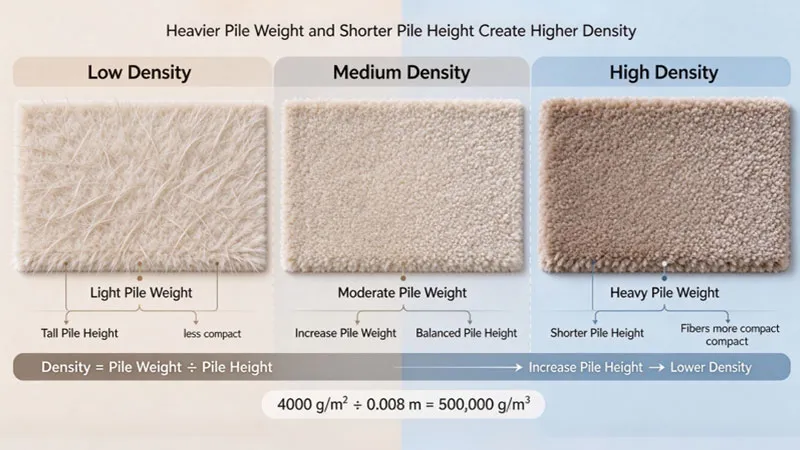
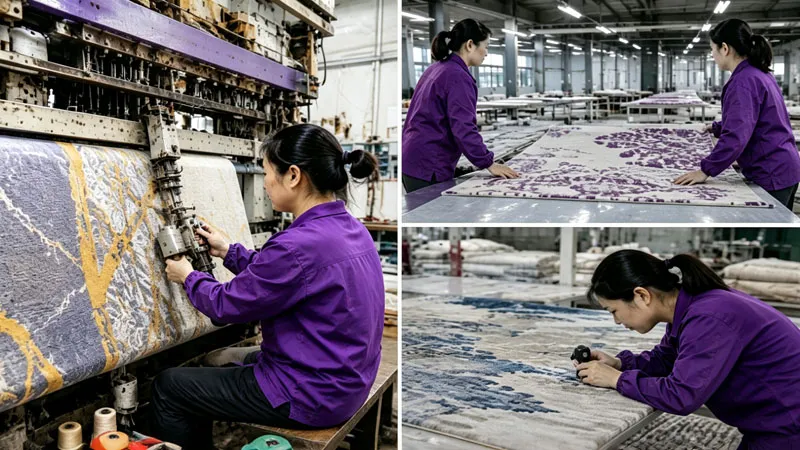
At Fab Carpet, every production batch is tested for pile weight and density before it leaves the Qinghai facility — not sampled once at order confirmation, but checked run by run. That’s the difference between a spec sheet and a guarantee.
Low Pile vs High Pile Carpet: The Side-By-Side Comparison
| Attribute | Low Pile (≤6mm) | High Pile (>12mm) |
|---|---|---|
| Typical construction | Axminster, tufted loop/cut-loop | Hand-tufted, hand-knotted plush |
| Traffic tolerance | Heavy to extra-heavy commercial | Light to medium commercial |
| Acoustic absorption (NRC) | Moderate | Higher |
| Maintenance frequency | Low | Higher — matting and crushing risk |
| Best-fit zones | Corridors, lobbies, ballrooms, High-Traffic Entertainment Areas | Guest rooms, VIP suites, executive lounges |
| Lead time | Standard production run | Custom hand-made work needs longer windows |
Low pile wins on durability math alone. Fiber blades stand more upright under repeated footfall because there’s less leverage on each strand. High pile wins on comfort and sound, but only in spaces where foot traffic is light and controlled — guest rooms, not lobbies.
Wyzenbeek abrasion test methodology
Choosing by Zone: Where Each Pile Height Actually Belongs
Hotel Guest Rooms and Suites
Guest rooms take a fraction of the foot traffic a lobby sees. This is where high pile earns its keep — better underfoot comfort, stronger sound dampening between rooms, and a visual softness that lower pile heights can’t replicate.
Corridors, Lobbies and Back-of-House
Corridors see rolling luggage, housekeeping carts, and constant footfall. Low pile, dense Axminster construction is close to non-negotiable here. Anything above 8mm in a hotel corridor is a maintenance budget waiting to happen.
Ballrooms and High-Traffic Entertainment Areas
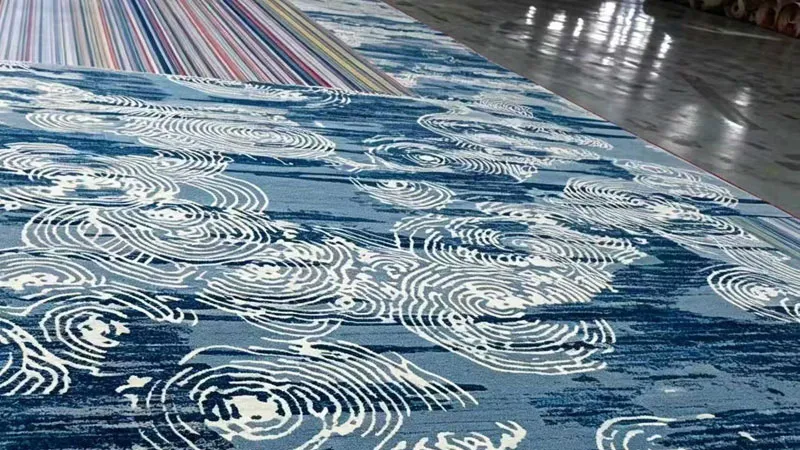
Large-format entertainment and event spaces combine heavy foot traffic with frequent furniture movement — chairs, tables, staging equipment dragged across the floor repeatedly. Low pile, high-density construction resists crushing under point loads far better than plush high pile, which shows permanent traffic patterns within months.
Full specification breakdown by hospitality zone
Fiber Choice Changes the Pile Height Equation
Synthetic fiber and wool don’t behave the same way at the same pile height. Wool has natural crimp memory — the fiber physically springs back after compression, where synthetic fibers rely on chemical treatments that degrade over the life of the carpet.
Premium New Zealand Wool holds this resilience at pile heights where synthetic fiber would already be showing permanent flattening. That’s why a hand-knotted wool construction can run at a slightly higher pile height in a moderate-traffic hospitality zone and still outperform a synthetic equivalent five years later.
Construction method matters just as much as fiber:
- Axminster — machine-woven, dense, ideal for patterned low-pile commercial applications
- Hand-tufted — faster production, strong customization flexibility for mid-traffic zones
- Hand-knotted — highest durability and design detail, typically reserved for feature areas and VIP suites
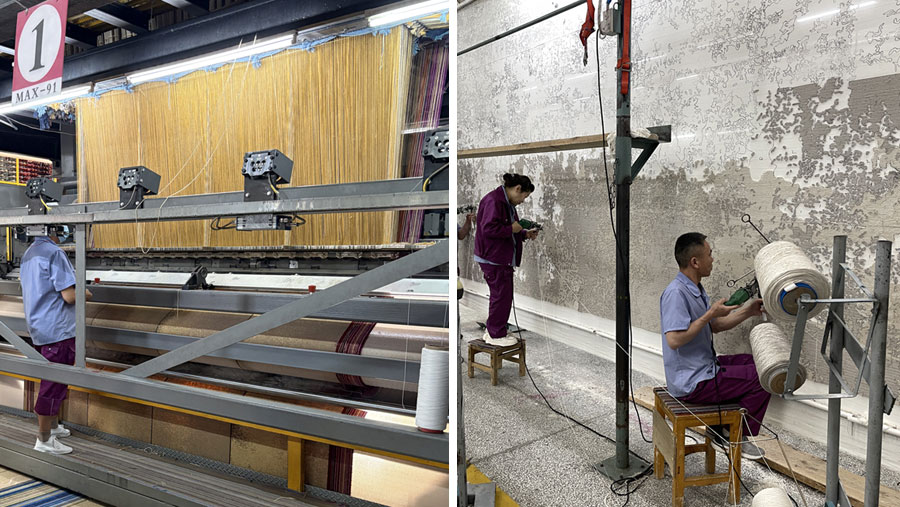
Fab Carpet runs both machine and hand-made production lines side by side, which means the construction method gets matched to the traffic zone instead of forcing one process to cover every application on a project.
Fire Rating and Compliance: The Section Most Guides Skip
This is where projects stall. A carpet can look perfect on paper and still fail a fire marshal’s review because the certification doesn’t match the market.
Fire Rating — ASTM E648 / Bfl-s1
North American commercial projects require Class I fire rating under ASTM E648. European projects reference Bfl-s1 under EN 13501-1. These are not interchangeable paperwork — a supplier needs test reports for the specific standard your jurisdiction enforces, not a generic “fire retardant” claim on a product sheet.
Indoor Air Quality — CRI Green Label Plus
Low-emission certification under CRI Green Label Plus (GLP9123 / GLP5308) matters for LEED-targeting projects and for hotel brands with internal sustainability mandates. Ask for the certificate number, not just the logo.
Verify low-emission carpet certification
European and UK Market Access — EN 14041, UKCA/UKMCA
EN 14041 (CE marking) covers resilient, textile and laminate floor coverings across the EU. Post-Brexit UK projects need UKCA or UKMCA marking separately — a common gap when suppliers assume CE marking alone covers UK delivery.
Marine Projects — MED Wheelmark
Cruise and marine hospitality carpet needs MED Wheelmark certification under IMO Marine Standard requirements. This is a narrow, specialized certification that most general commercial carpet suppliers don’t hold.
Management System Backbone — ISO 9001/14001/45001
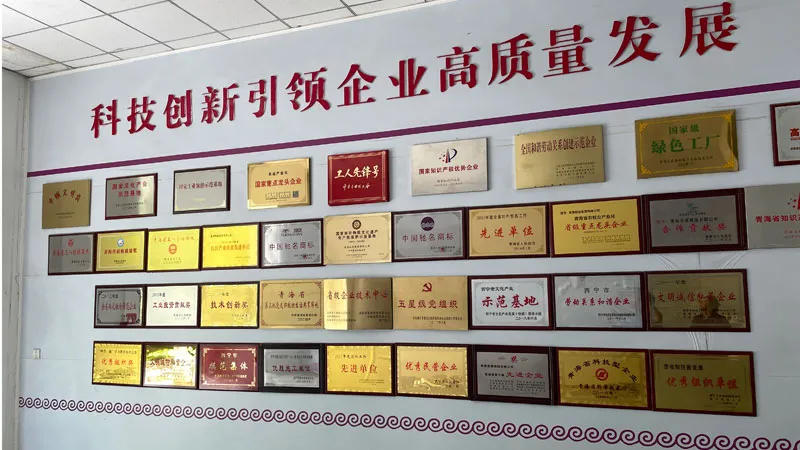
ISO 9001 (quality management), ISO 14001 (environmental management), and ISO 45001 (occupational health and safety) tell you how a factory operates day to day — not just what it produces. Fab Carpet holds all three, alongside the AAAAA Quality Standard rating, and every carpet leaving the facility carries Class I fire rating (ASTM E648 / Bfl-s1) as a baseline, not an upgrade option.
Acoustic Performance: NRC and Pile Height Correlation
Sound absorption (NRC) generally rises with pile height and backing thickness — high pile plush construction absorbs more ambient noise than a tight low-pile weave. But in multi-story buildings, impact noise transfer between floors (measured by IIC ratings) depends more on underlay and backing construction than pile height alone.
The trade-off procurement teams face: a corridor needs low pile for durability, but low pile alone won’t solve impact noise between guest floors. That gap gets closed with underlay specification, not by pushing pile height higher than the traffic zone can tolerate.
Total Cost of Ownership: Low Pile vs High Pile Over 10 Years
Run the numbers for a 500-room hotel corridor program and the pile height decision compounds fast.
| Cost Factor | Low Pile (Commercial-Grade) | High Pile (Standard Plush) |
|---|---|---|
| Initial material cost | Higher per sq. yd. — denser construction | Lower per sq. yd. |
| Expected replacement cycle | 10–15 years in heavy traffic | 5–7 years in same traffic zone |
| Annual maintenance frequency | Lower — resists matting | Higher — requires deep restoration cleaning |
| Mid-cycle replacement risk | Low | High — visible wear patterns by year 4–5 |
Low pile costs more upfront and less over the asset’s life. That’s the calculation procurement directors need in front of ownership before a decision gets made on sample feel alone.
Estimate your project’s material cost and coverage using the Carpet Calculator
Sourcing Low Pile and High Pile Carpet: What Procurement Teams Miss
Supplier Vetting Checklist
Before committing to a factory, confirm:
- Fire rating test reports specific to your market (ASTM E648 or Bfl-s1)
- Density and pile weight data per SKU, not just pile height
- Sample lead time — under two weeks is standard for an established production line
- Factory-level ISO certification, not just a trading company’s paperwork
MOQ and Tiered Pricing
Custom Axminster and hand-tufted orders price on a tiered structure — order volume, colorway complexity, and construction method all move the number. Hand-knotted work carries the longest lead time and the smallest practical MOQ; machine-woven Axminster scales down cost per unit as volume rises.
The Source-Direct Advantage
Working directly with a factory that runs its own Axminster, hand-tufted, and hand-knotted lines — rather than through a trading intermediary — typically removes 20–30% of markup from the landed cost. It also shortens the compliance chain: certifications sit with the factory, not a third party reselling someone else’s paperwork. Fab Carpet holds its GLP, EN 14041, and ISO certifications in-house, which means documentation requests get answered in days, not routed through a distributor first.
Request certified test reports and factory documentation
FAQ: Low Pile vs High Pile Carpet for Commercial Projects
Is low pile or high pile carpet better for hotel corridors?
Low pile, dense construction is the standard choice. Corridors see constant rolling traffic that flattens high pile within a few years.
What pile height counts as commercial-grade?
Generally 6mm or under for heavy-traffic zones. Anything higher needs a density check before it’s approved for corridors or ballrooms.
What’s the typical MOQ for custom Axminster hotel carpet?
MOQ varies by colorway complexity and yarn type — machine-woven Axminster typically scales down per-unit cost at higher volumes, while hand-knotted runs carry smaller practical minimums.
How long does sample production take before bulk order?
Established factory lines typically turn samples around in under two weeks, not counting international shipping time.
Does wool carpet perform differently than synthetic at the same pile height?
Yes. Wool’s natural crimp memory resists crushing better than synthetic fiber at comparable pile heights, particularly in moderate-traffic zones.
What fire rating documentation do I need for a North American vs European project?
North America requires ASTM E648 Class I test reports. European projects require Bfl-s1 classification under EN 13501-1 — request the report matching your specific jurisdiction.
Get Your Project Specified Right the First Time
Pile height decisions get expensive when they’re made on sample feel instead of traffic data. Request certified test reports, free sample swatches, or a formal RFQ for your next project directly from the production line.
Run your project numbers with the Carpet Calculator