Call us now:

Frieze vs plush carpet isn’t a comfort question when you’re specifying 40,000 square feet for a hotel corridor. It’s a wear-life, fire-code, and budget question. Get the spec wrong and you’re reordering flooring in 18 months instead of 8 years. This guide breaks down the engineering data, compliance paperwork, and true cost numbers that residential blogs skip entirely.
Frieze vs Plush Carpet: What Actually Separates Them at Commercial Scale
Plush pile is sheared even, short, and dense. It reads soft and formal — good for guestrooms, bad for corridors. Frieze pile is twisted tight during heat-setting, so fibers lie sideways instead of standing straight up. That single manufacturing step is why frieze resists crushing and hides foot traffic patterns.
Face weight and twist level matter more than either brand name. A frieze carpet at 8 twists per inch and 40 oz/yd² will outperform a “premium” plush at half that density, full stop.
Fiber Choice: Wool vs Synthetic Under Real Traffic
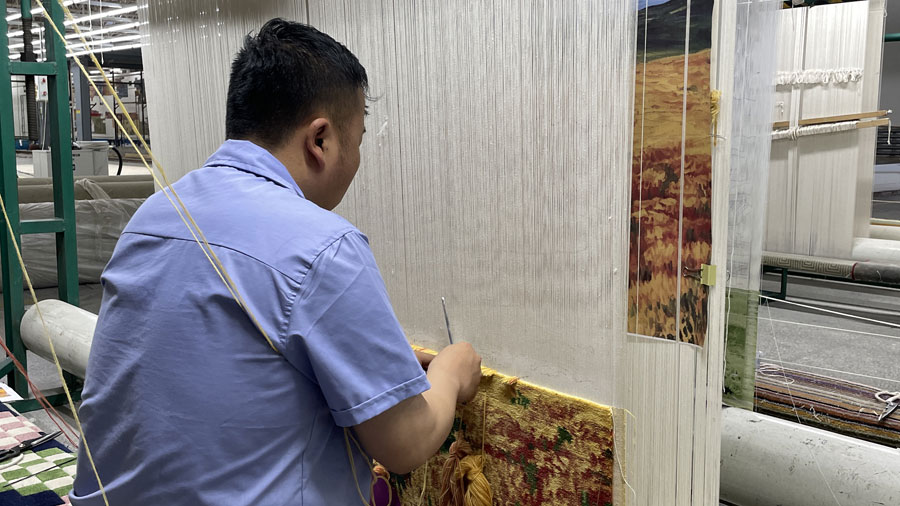
Nylon and PET frieze carpets resist staining well and cost less upfront. Wool — specifically New Zealand wool — recovers from compression better than either synthetic option, which matters in lobbies where furniture gets rearranged constantly. Fab Carpet sources New Zealand wool directly for its Axminster and hand-tufted lines, because fiber crimp and resilience directly determine how a carpet looks after year three, not just day one.
Construction Method Comparison
| Construction | Best For | Typical Lead Time | Design Flexibility |
|---|---|---|---|
| Machine-Made Frieze | Corridors, high-traffic areas | 3-4 weeks | Low-Medium |
| Hand Tufted | Guestrooms, feature areas | 4-6 weeks | High |
| Axminster | Patterned lobbies, entertainment venues | 6-8 weeks | Very High |
| Hand Knotted Wool | Luxury suites, villas | 10-14 weeks | Highest |
Commercial Carpet Fire Rating Standards: What Buyers Must Verify
Fire rating isn’t optional paperwork. It’s the line item that gets a project rejected by a fire marshal after installation. Class I Fire Rating under ASTM E648, matched to Bfl-s1 in European specs, is the baseline for hotel corridors, guestroom floors, and high-traffic commercial spaces.
Fab Carpet tests every production run against ASTM E648 before shipment, not just at initial product certification. That distinction matters — a certified product line and a certified batch are two different things, and buyers rarely ask which one they’re getting.
ASTM E648 fire test method reference
Marine and Cruise-Grade Applications
Interior fit-outs for cruise cabins and marine vessels need MED Wheelmark certification under IMO standards, a tier above standard commercial fire testing. Few source factories carry this alongside standard commercial certifications, which narrows the supplier pool fast for marine-spec projects.
Compliance Checklist: Certifications by Region and Project Type
Different markets require different paperwork, and mismatched certification is the single most common reason shipments get held at customs.
| Certification | Region/Use | Verifies |
|---|---|---|
| CRI Green Label Plus (GLP9123/GLP5308) | US, indoor air quality | Low VOC emissions |
| EN 14041 (CE) | EU | Fire, slip, acoustic performance |
| UKCA/UKMCA | UK post-Brexit | Product conformity |
| ISO 9001/14001/45001 | Global | Quality, environmental, safety management |
| MED Wheelmark | Marine/cruise | IMO fire and safety compliance |
Before signing a PO, ask your supplier for the certificate number and check it against the issuing body’s public directory. A surprising number of “certified” carpets can’t be verified this way.
CRI Green Label Plus certified product directory
Total Cost of Ownership: Frieze vs Plush Beyond the Quote
Upfront price tells you almost nothing about a 10-year hospitality contract. Run the number as cost per square meter per year of expected service life instead.
A plush wool carpet at higher upfront cost but 10-year wear life often beats a cheap frieze needing replacement at year 5. Maintenance labor compounds this: high-traffic frieze in commercial settings typically needs less frequent deep cleaning than plush, which lowers ongoing facilities spend.
Where the 20-30% Markup Actually Comes From
Trading companies buy from factories, add margin, then resell to your project. That markup — usually 20% to 30% — comes with zero visibility into actual production conditions or QC records. Buying direct from a source factory like Fab Carpet’s Qinghai facility removes that layer, and gives you direct access to production scheduling, so lead-time slippage gets caught before it becomes a delivery crisis.
Ask any supplier for their MOQ and tiered pricing structure upfront. If they can’t explain their own cost breakdown clearly, they’re likely a reseller, not a manufacturer.
Calculate your project’s carpet cost and coverage area
Matching Carpet Type to Project Zone
| Project Zone | Recommended Construction | Required Certification |
|---|---|---|
| Guestrooms/Suites | Plush, Hand Knotted Wool | CRI GLP, ASTM E648 |
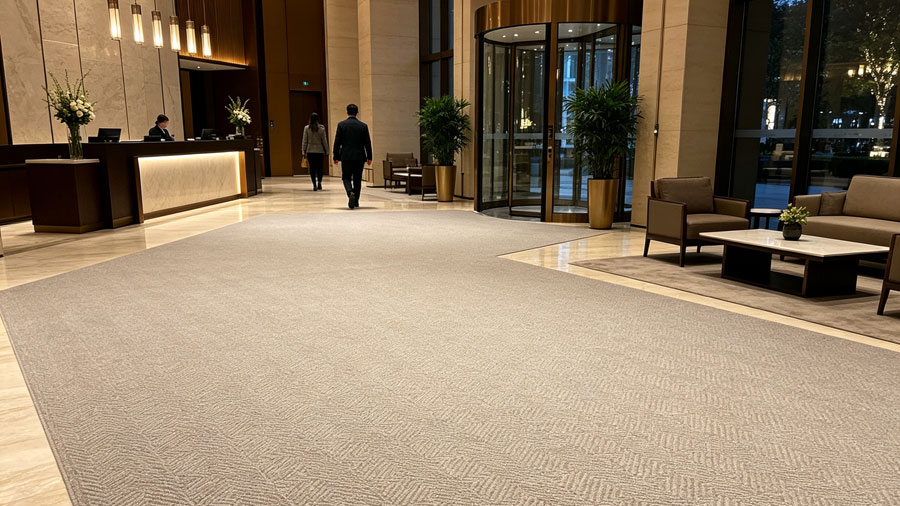
| Corridors/Lobbies | Frieze, Axminster | ASTM E648, EN 14041 |
| High-Traffic Commercial Spaces | Frieze, Machine-Made | ASTM E648 |
| Marine Cabins | Custom Axminster | MED Wheelmark |
From Spec to Delivery: How Source-Factory Production Works
Custom orders start with a design file, move to a handloom or Axminster sample, then get approved before bulk production begins. Fab Carpet runs multi-stage QC under its AAAAA standard — raw wool inspection on arrival, inline checks during tufting or weaving, then pre-shipment lab retesting against the exact fire and wear specs the buyer ordered, not just general product certification.
That final retest step catches batch-level variance before it reaches a job site, which is where most quality disputes on international orders actually originate.
step-by-step OEM/ODM sampling process
Frequently Asked Questions
Is frieze or plush carpet better for high-traffic entertainment areas?
Frieze. Its twisted fiber construction resists crushing and hides wear patterns better under continuous foot traffic.
What fire rating do hotels need for corridor carpet?
Class I Fire Rating under ASTM E648 is the standard baseline for hotel corridors and guestroom floors in most US jurisdictions.
Can wool carpet meet Class I fire rating standards?
Yes. Properly treated New Zealand wool constructions pass ASTM E648 Class I testing regularly, contrary to the assumption that only synthetics qualify.
What’s the typical MOQ for custom Axminster hotel carpet?
MOQs vary by pattern complexity and yarn type. Request project-specific pricing directly from the factory rather than relying on published minimums.
How long does OEM/ODM sampling take?
Standard sample turnaround runs 2-3 weeks for tufted constructions, longer for custom Axminster patterns requiring loom setup.
Do source factories provide fire test reports directly?
Reputable manufacturers provide batch-specific ASTM E648 test reports on request — always ask before final PO confirmation, not after.
Request Your Project Quote
Specifying carpet for a hospitality or commercial build shouldn’t mean guessing on lead times or certification paperwork. Request free sample swatches, submit an RFQ for your project scope, or download the technical data sheet (TDS) directly from Fab Carpet’s production team.