Call us now:

Luxury hotel carpet decisions get expensive fast when specs are wrong. Wrong fire rating means a failed inspection. Wrong density means replacement in three years, not ten. Wrong supplier means a shipment stuck at customs while your opening date slips. This guide breaks down the fiber science, the compliance paperwork, and the sourcing math procurement teams actually need before they sign a PO.
What “Luxury” Actually Means in Hotel Carpet Specs
Guests judge carpet by feel underfoot. Procurement teams should judge it by three numbers: fiber grade, construction density, and fire classification. A carpet can look expensive on a showroom sample and still fail a Vettermann Drum Test after 18 months in a lobby.
Why Premium New Zealand Wool Sets the Benchmark
New Zealand wool fiber has natural crimp, which means the fiber springs back after compression instead of matting flat. That single property is why wool carpet still looks new in a corridor after five years of wheeled luggage traffic, where synthetic fibers show visible wear paths.
Fab Carpet sources this wool directly and tracks each batch from raw fiber to finished roll. That traceability matters for hospitality buyers who need consistent color and hand-feel across a 200-room reorder six months after the original install.
| Fiber | Durability | Stain Resistance | Feel | Cost |
|---|---|---|---|---|
| New Zealand Wool | Very High | Good (natural lanolin) | Superior | Higher upfront |
| Nylon | High | Excellent | Good | Mid-range |
| Polyester | Medium | Excellent | Good | Lower |
| Wool-Nylon Blend | High | Good | Very Good | Mid-range |
Axminster, Hand-Tufted, or Machine-Made: Which Construction Fits Your Project
Axminster Carpet for Pattern-Heavy Lobbies
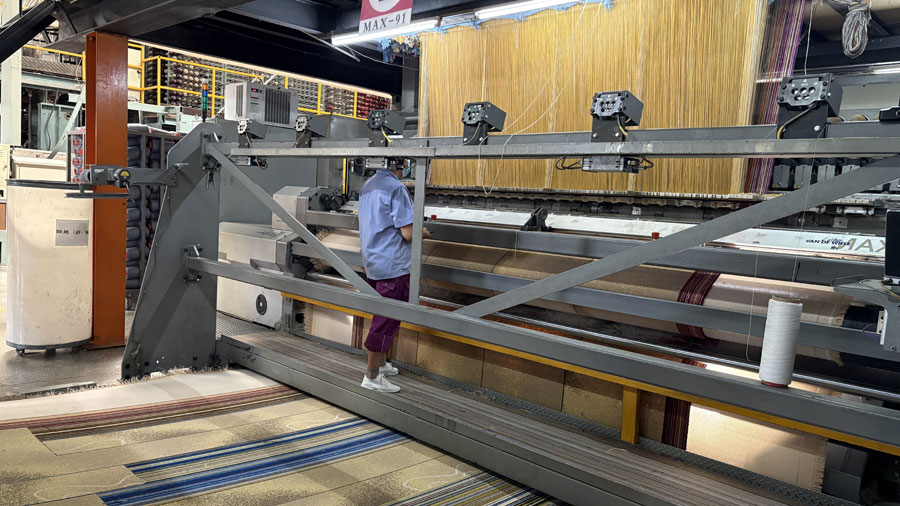
Axminster weaving locks each tuft individually, which lets designers run intricate multi-color patterns without pattern bleed. It’s the standard choice for lobbies and ballrooms where the carpet functions as a design centerpiece, not background flooring.
Hand-Tufted vs Hand-Knotted
Hand-tufted carpet uses a tufting gun over a backing frame — faster production, lower cost, strong for guest rooms and corridors. Hand-knotted construction takes longer and costs more, but delivers the density and longevity suited to signature suites or heritage properties.
Machine-Made for Volume Projects
For a 300-key property rolling out identical corridors across ten floors, machine-made construction gives repeatable quality at a price point that hand-made can’t match. Fab Carpet runs both machine and hand-made lines, so the construction method gets chosen by project need, not by what one factory happens to offer.
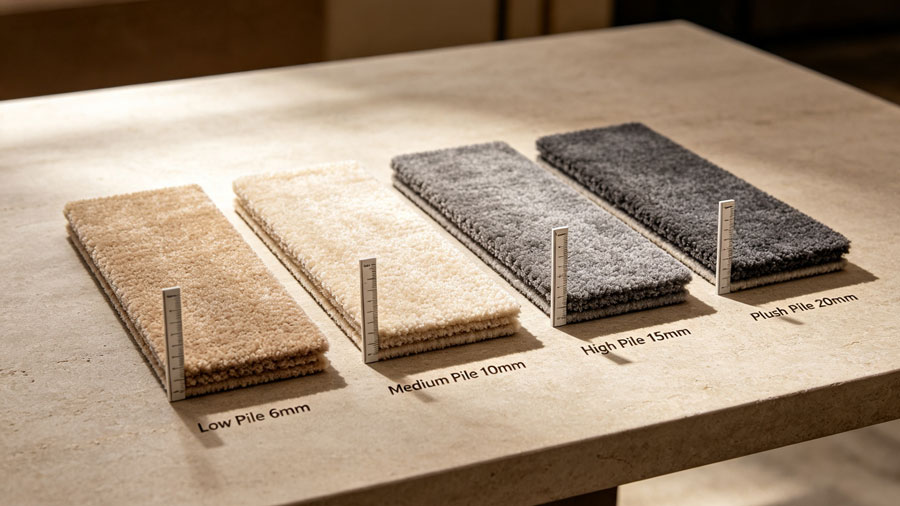
Pile Weight, Pile Height, and Density: The Formula Nobody Explains
Density = Pile Weight ÷ Pile Height. Higher density means the fiber stands denser per square inch, which directly predicts how long a carpet resists crushing in high-traffic zones.
| Zone | Recommended Pile Height | Density Priority |
|---|---|---|
| Lobby / Entrance | Low-Medium | Very High |
| Guest Room | Medium-High | Medium |
| Corridor | Low | High |
| F&B / Dining | Low | High |
A common buyer mistake: specifying a plush, high-pile carpet for a corridor because it felt good in the showroom. High pile in low-clearance, high-traffic zones crushes fast and voids most maintenance warranties.
Compliance Checklist: Certifications to Verify Before You Order
Don’t take a supplier’s word for certification. Ask for the certificate number and check it against the issuing body’s public directory.
- CRI Green Label Plus (GLP9123 / GLP5308) — indoor air quality compliance
- EN 14041 (CE Marking) — required for EU market entry
- MED Wheelmark (IMO Marine Standard) — mandatory for cruise and marine hospitality
- UKCA / UKMCA — required for post-Brexit UK projects
- ISO 9001 / 14001 / 45001 — quality, environmental, and safety management systems
verify certificate authenticity
Fab Carpet holds the full certificate set above under its AAAAA Quality Standard, with documentation available per shipment — not just per product line.
Fire Safety: Class I Rating, ASTM E648, and Bfl-s1 Explained
North America and Europe use different fire test methods, and mixing them up on a spec sheet gets shipments rejected at inspection.
| Standard | Region | What It Measures |
|---|---|---|
| ASTM E648 | North America | Critical radiant flux (Class I = highest rating) |
| Bfl-s1 (EN 13501-1) | Europe / UK | Flame spread + smoke development |
| NFPA 253 | US (high-rise) | Radiant panel test for egress paths |
Fab Carpet’s hospitality lines carry Class I Fire Rating under ASTM E648 as well as Bfl-s1, so the same product line clears both US and EU inspections without a separate reformulation.
compare fire-rated construction options
Acoustic Performance: NRC and STC in Real Hotel Corridors
Guests notice noise before they notice color. NRC measures how much sound the carpet absorbs in a room; STC measures how well the floor assembly blocks sound between floors. Denser wool construction with the right underlay measurably cuts footstep noise transfer between guest floors — a spec point architects should request test data for, not assume.
Total Cost of Ownership: What Cheap Carpet Actually Costs
A lower per-square-meter price often hides a shorter replacement cycle. Run the ten-year math before comparing quotes.
Interactive Tool: Estimate your project’s carpet cost and area needs
- Wool: higher upfront, 8-10 year lifecycle in guest rooms
- Nylon: mid-range, 5-7 year lifecycle
- Polyester: lowest upfront, 3-5 year lifecycle in high-traffic zones
Replacement labor, room downtime, and disposal costs stack on top of material price each cycle. Buyers comparing quotes on unit price alone routinely underestimate total cost by 20-30% over a decade.
Sourcing Without the Middleman Markup
Trading companies add a layer between the buyer and the factory floor. That layer adds 20-30% in markup and removes direct visibility into production schedules — which is exactly where delays start.
Supplier Vetting Checklist
- Request the factory’s own QC documentation, not a trading company summary
- Confirm certificate numbers directly against issuing bodies
- Ask for sample approval and batch color consistency records
- Clarify MOQ and tiered pricing before design finalization
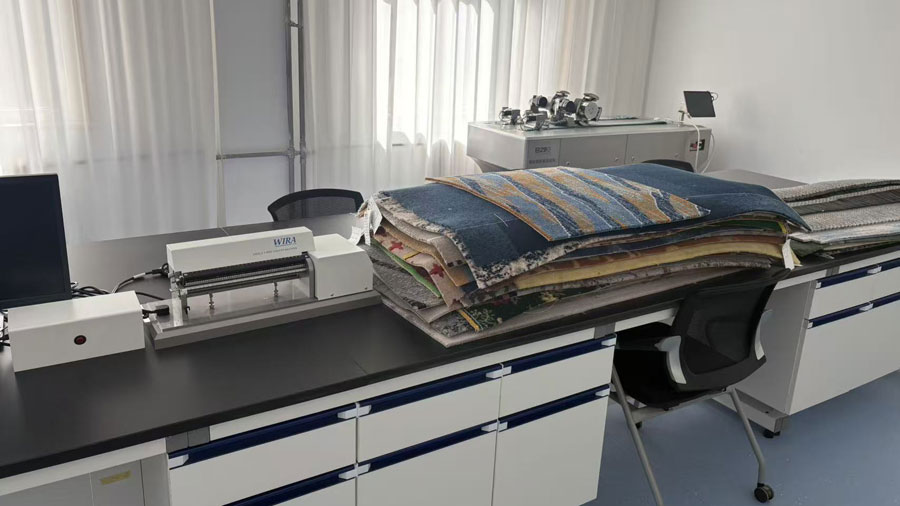
Fab Carpet ships direct from its Qinghai production facility, which removes the trading layer entirely. OEM/ODM support means a design goes from concept to production sample without a third party renegotiating specs in between.
FAQ
What’s the typical MOQ for custom hotel carpet?
MOQ depends on construction method — machine-made runs typically start lower than hand-tufted or Axminster custom orders. Confirm per project during RFQ.
How long does sample production take?
Standard sample turnaround runs 7-14 days depending on construction complexity and pattern detail.
What’s the typical sea freight lead time?
Ocean freight from a China-based facility to North America or Europe typically runs 30-45 days, separate from production lead time.
Can I get a fire test report before ordering?
Yes — request the ASTM E648 or Bfl-s1 test report tied to the specific product line, not a generic company-level certificate.
Does wool carpet cost more to maintain than nylon?
Wool typically needs less frequent deep cleaning due to natural soil resistance, though professional cleaning cost per session can run slightly higher.
Get Your Project Specs Verified
Request free sample swatches, a full TDS technical data sheet, or submit an RFQ for your project specs directly with Fab Carpet’s production team.