Call us now:

Can carpet cause allergies in a 200-room hotel or a corporate lobby? Wrong spec, and yes — guest complaints, warranty claims, even project delays follow. This guide skips the lifestyle debate and gives procurement teams the fiber data, certification checklist, and factory-side QC standards needed to spec carpet that passes both health and compliance review.
Can Carpet Cause Allergies? Why the Residential Answer Doesn’t Apply to Contract Projects
Most articles online answer this question for homeowners deciding between carpet and hardwood. That framing breaks down the moment you’re specifying flooring for a 40,000 square foot hospitality project.
A homeowner replaces carpet every seven to ten years. A hotel operator can’t. The carpet in a lobby or corridor gets ten thousand footsteps a day, gets cleaned by contract staff on a schedule, and gets inspected by fire marshals and health authorities. Allergen risk isn’t abstract here — it’s a line item in your facilities budget and a liability question for your legal team.
The honest answer: carpet fiber itself rarely causes allergic reactions. What causes them is trapped dust mite waste, mold spores from moisture retention, and volatile organic compound (VOC) off-gassing from low-grade backing materials. All three are controllable through fiber selection, construction method, and certified manufacturing — not through banning carpet from your spec sheet.
The Business Risk Behind Allergen Exposure in High-Traffic Commercial Spaces
Guest health complaints move fast on review platforms. One flagged allergy incident in a hotel corridor or a high-traffic commercial space can cost more in reputation damage than the carpet itself.
Three risk points procurement teams underestimate:
- Resuspension in high-footfall zones. Every footstep on poorly maintained carpet launches trapped particles back into the air. Lobbies, corridors, and event floors see this constantly.
- Housekeeping labor cost. Consumer advice like “vacuum twice a week” doesn’t scale to a property running at 90% occupancy with a fixed cleaning staff.
- Warranty exposure. If a carpet fails a fire or VOC test after installation, the liability often lands on whoever approved the spec — not the installer.
None of this is solved by switching to hard flooring across an entire property. It’s solved by sourcing carpet built to commercial-grade compliance from the start.
Which Carpet Fiber Is Actually Hypoallergenic for Contract Use?
Fiber choice is where most allergen risk gets decided — long before installation.
Premium New Zealand Wool vs. Synthetic Fiber
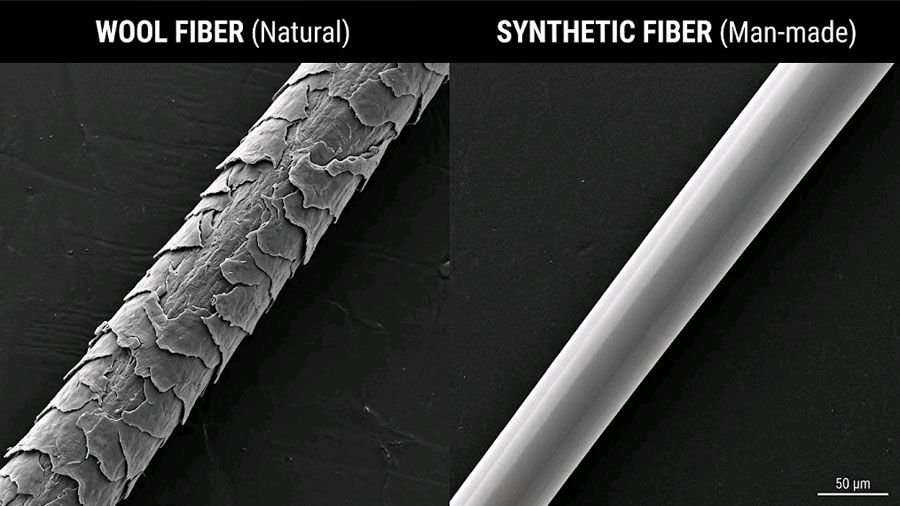
Premium New Zealand wool has a naturally waxy surface (lanolin-based) that resists moisture absorption, which limits the humid conditions dust mites need to thrive. Wool also has a higher ignition threshold than most synthetic fibers, which matters when you’re stacking fire compliance on top of allergen control.
Nylon remains a solid mid-tier choice — durable, easier on budget — but it lacks wool’s natural moisture resistance. Polyester costs less upfront and wears faster under heavy foot traffic, which shortens the replacement cycle and increases lifecycle allergen risk as pile density degrades.
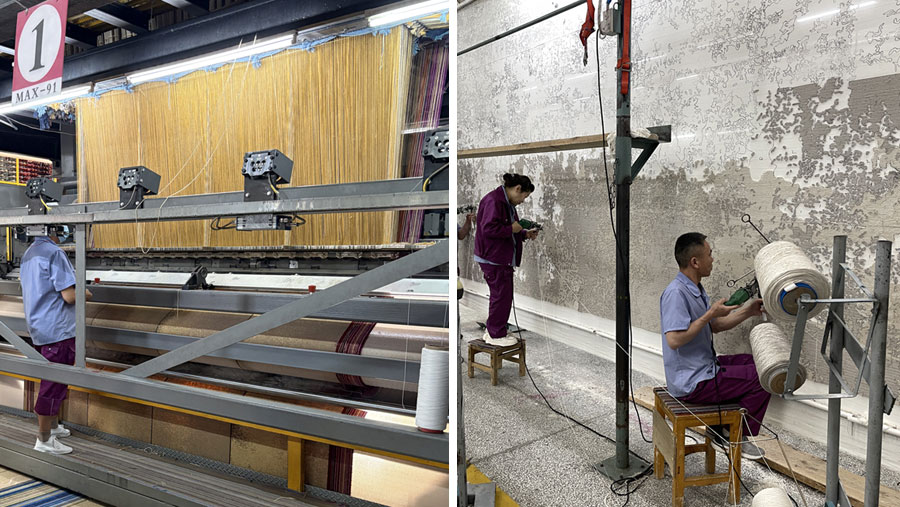
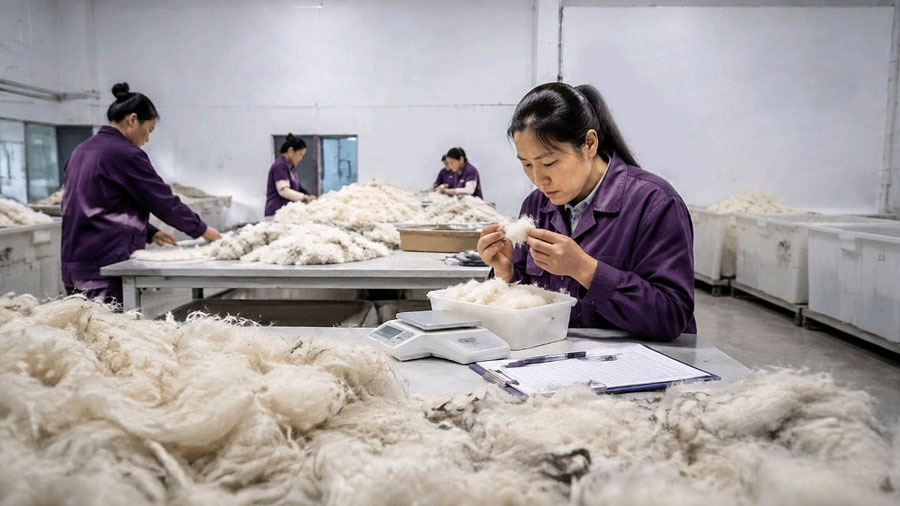
At Fab Carpet’s production line, raw wool batches get graded before dyeing even starts. Fiber that doesn’t meet lanolin content and tensile strength benchmarks gets rejected at intake — not caught at final inspection.
Pile Height, Density, and Construction Method
Density matters more than most spec sheets acknowledge. A low-density, high-pile carpet traps particles deeper and resists vacuum extraction. A tightly woven, moderate-pile construction sheds particles at the surface, where routine cleaning actually reaches them.
| Construction | Typical Density | Allergen Trap Risk | Best Fit |
|---|---|---|---|
| Axminster | High, tight loop | Low | Hotel lobbies, corridors, patterned areas |
| Hand-Tufted | Medium-high | Low-Medium | Custom rugs, feature areas |
| Hand-Knotted | Very high | Low | Luxury suites, boardrooms |
| Machine-Made (standard) | Variable | Medium | Budget-conscious, high-turnover spaces |
Explore wool vs synthetic fiber performance data
Certifications That Actually Reduce Allergen and VOC Risk
A supplier telling you their carpet is “hypoallergenic” means nothing without a certificate behind it. Here’s what to actually request.
CRI Green Label Plus (GLP9123 / GLP5308)
This certification tests for VOC emissions specifically — the chemical off-gassing that triggers headaches and respiratory irritation in newly installed carpet. GLP9123 covers carpet, GLP5308 covers adhesives. Ask for both if your project includes glue-down installation.
EN 14041 (CE) and UKCA/UKMCA
Required for carpet entering EU and UK commercial projects. Covers fire behavior, slip resistance, and formaldehyde emission limits. Skip this and your shipment can get held at customs — a delay that’s cost more than one hotel opening date.
ISO 9001 / 14001 / 45001
These aren’t allergen-specific, but they tell you whether the factory has documented quality control, environmental management, and worker safety systems. A supplier without these certifications is a supplier without a paper trail when something goes wrong.
MED Wheelmark (IMO Marine Standard)
Relevant for cruise and marine interior projects, where fire and toxicity standards exceed standard building code.
Fire Rating and Allergen Control Aren’t Separate Specs
Fire safety and indoor air quality get treated as separate checkboxes on most spec sheets. They shouldn’t be.
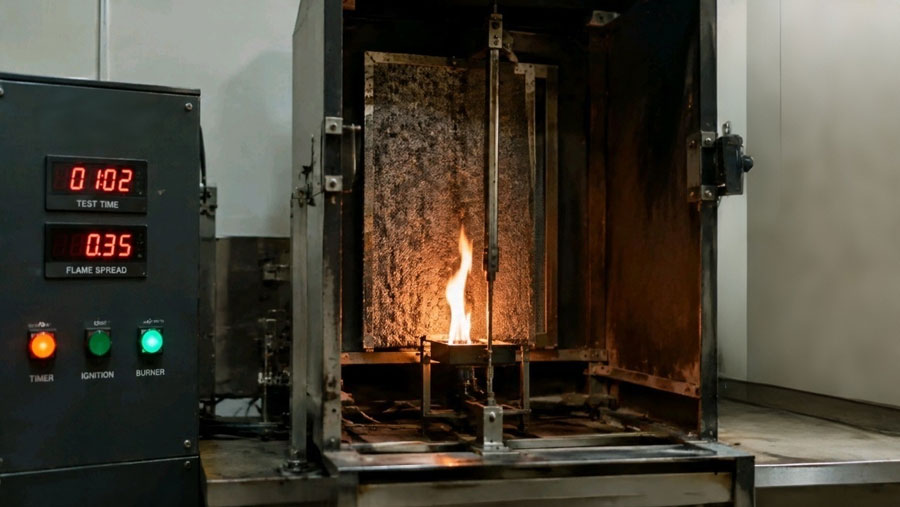
Class I fire rating (ASTM E648, radiant panel test) or Bfl-s1 (the European equivalent) measures how carpet performs in flame spread and smoke development. Some fire-retardant treatments used to hit these ratings rely on chemical additives that raise VOC output — which undercuts the low-emission goal you’re chasing with GLP certification.
The fix is sourcing fiber and backing systems engineered to meet fire rating without heavy post-treatment chemical loading. Fab Carpet’s wool-based constructions hit Class I / Bfl-s1 through fiber density and weave tightness first, with treatment as a secondary layer — not the only line of defense.
Durability, Acoustics, and the Real Cost of Ownership
Allergen control degrades over a carpet’s service life if the underlying construction can’t hold up to traffic.
- Abrasion resistance (tested via Wyzenbeek or Martindale methods) predicts how fast pile density drops — and lower density means more exposed backing and higher allergen retention over time.
- Acoustic performance (NRC/STC ratings) matters in corridors and meeting rooms, where sound dampening and air quality both factor into guest comfort.
- Total cost of ownership should include cleaning frequency, expected replacement cycle, and labor — not just the per-square-meter quote.
Use the calculator below to model area and construction type against estimated project cost before you request formal quotes.
Carpet Calculator — estimate cost by area, fiber type, and construction method.
Source Factory vs. Middleman: A Procurement Due-Diligence Checklist
Every layer between you and the loom adds cost and risk. Here’s what to check before signing a supplier agreement.
Supplier qualification checklist:
- Request current CRI, EN 14041, and ISO certificates — not expired ones
- Ask for third-party lab test reports, not just factory self-declarations
- Request physical samples matched against dye-lot batch numbers
- Confirm MOQ and tiered pricing structure in writing before sampling
Why direct sourcing matters: working with a source factory instead of a trading company or regional distributor typically removes 20-30% in middleman markup — without changing the certification or QC standard, since you’re buying the same production run.
Fab Carpet operates OEM/ODM production out of Qinghai, with wool sourcing, weaving, and QC handled under one roof. Buyers get certificate copies and batch-matched samples before committing to a production order — not after.
Compare OEM and ODM production paths
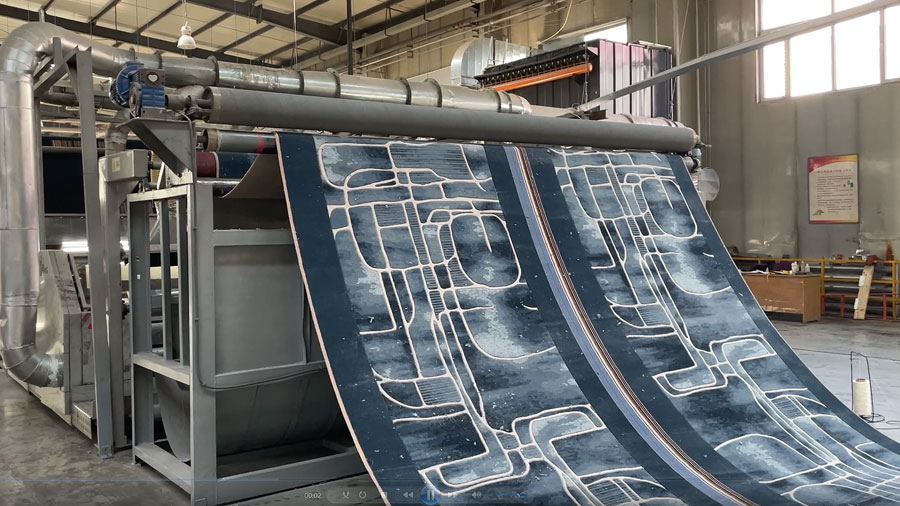
From Design to Delivery: What a Compliant QC Process Looks Like
A certification on paper means little if the production floor doesn’t follow it consistently. A defensible QC process runs through five checkpoints:
- Raw wool intake — lanolin content and fiber strength graded before dyeing
- Dye lot consistency — batch-matched to avoid visible color variance across large-format installs
- Weaving and density check — pile weight verified against spec before fire treatment
- Fire and VOC testing — samples pulled per production run, not per shipment
- Final inspection and packing — moisture content checked before container loading to prevent mold risk in transit
This is the sequence Fab Carpet runs on every commercial order, with documentation available for buyer review before shipment — not just on request after a complaint.
What to Put in Your RFP or Spec Sheet
Skip vague language like “hypoallergenic” or “premium quality” in your request for proposal. Specify:
- Minimum GLP9123/GLP5308 or equivalent VOC certification
- Required fire rating (Class I / Bfl-s1) with test method named
- Fiber type and minimum pile density (oz/yd² or g/m²)
- Dye lot consistency requirement across full order quantity
- Sample lead time and full production lead time, stated separately
FAQ: Common Questions from Commercial Buyers
Does wool carpet cause more allergies than synthetic carpet?
No. Wool’s natural moisture resistance generally makes it less hospitable to dust mites than synthetic fiber, provided humidity is controlled during installation and use.
Is fire-rated carpet legally required for hotels?
In most jurisdictions, yes. Building codes typically require Class I (ASTM E648) or Bfl-s1 rated carpet for corridors and public areas in hospitality buildings.
What’s the typical MOQ for OEM/ODM custom commercial carpet?
MOQ varies by construction method — hand-tufted and Axminster orders typically start lower than fully machine-woven runs. Confirm directly with your supplier before committing to a design.
How long does sample production take?
Standard sample swatches usually ship within days. Custom color or pattern samples matched to a specific project take longer, since they involve a dedicated dye run.
How long is the shipping lead time for a full commercial order?
Ocean freight lead times depend on destination port and order volume. Confirm production lead time and shipping time separately when requesting a quote — they’re not the same number.
Can hand-tufted carpet meet the same certifications as machine-made carpet?
Can hand-tufted carpet meet the same certifications as machine-made carpet?
Yes, provided the same fiber and backing materials are used and the finished product goes through the same third-party testing.
Request Your Certification Documents and Free Sample
Specifying carpet for a commercial project means verifying certifications, not taking a supplier’s word for it. Request free sample swatches, full TDS technical data sheets, and current GLP/EN certification copies before your next RFP deadline.