Call us now:

Commercial carpet cost per square foot changes with every specification, and the surprises arrive late: freight and duties after approval, fire reports that don’t match the shipped carpet, production that runs past handover. This guide splits the price into three layers, shows which specs drive each one, and gives you checks that protect budget and schedule. It draws on Fab Carpet’s factory data and project delivery experience, for architects, designers, developers and procurement teams buying in North America and Europe. Every number you need comes from your own specification, not a catalog.
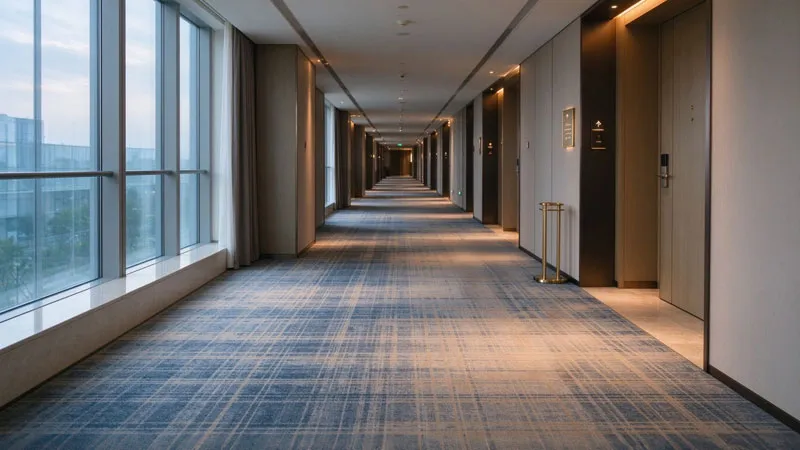
How Much Is Commercial Carpet Per Square Foot? It Depends on Your Specification
Fab Carpet doesn’t publish a fixed commercial carpet cost per square foot. Every project is quoted against its own specification. A catalog price would mislead you, because two carpets that look alike can differ widely in face weight, density, fiber and backing.
You get a firm number after we confirm six inputs:
| Input | Why it changes the price |
|---|---|
| Construction (Axminster, hand tufted, hand knotted, machine & hand-made) | Sets loom or labor time and pattern freedom |
| Fiber (NZ wool, wool-nylon blend, nylon, polypropylene) | Sets material cost and expected lifespan |
| Face weight, pile height, density | Sets yarn consumption and wear life |
| Backing and underlay | Affects acoustics, installation method and cost |
| Design and colors | Custom colors and patterns add set-up work |
| Order volume and Incoterm | Spreads fixed costs and defines which layer you are pricing |
Send these with your RFQ, or run a first estimate with the Carpet Calculator. Our engineers return a written quotation, normally within one business day, with the specification and the Incoterm stated on the page.
The Three-Layer Price Model for Commercial Carpet
Most online price guides quote one number: the installed price. Export buyers need three.
| Layer | What it covers | Who carries it | Common trap |
|---|---|---|---|
| Ex-works / FOB | Carpet, backing, packing, loading at origin | Supplier quotes, buyer pays | Quotes with different specs look comparable but aren’t |
| Landed (CIF / DDP) | Ocean freight, insurance, duties, port and inland charges | Depends on Incoterm | Duties and port fees added after approval |
| Installed | Labor, subfloor prep, adhesive, underlay, wastage | Contractor | Wastage ignored on large pattern repeats |
Quotes conflict because they measure different layers. One supplier quotes ex-works. Another quotes installed. A third includes underlay and a fourth doesn’t. Before comparing any two prices, confirm the Incoterm, the construction, the backing and whether wastage is included.
Fab Carpet quotes per square meter against a written specification, on the Incoterm you request. To convert any quote:
price per sq ft = price per sqm ÷ 10.764
For example, a quote of 100 per sqm equals 9.29 per sq ft. This is a unit conversion only, not a price. Convert both quotes to the same unit and the same layer before you compare them.
What Drives Commercial Carpet Price Per Square Foot?
Five variables move the price more than anything else.
Construction Method
| Method | Best for | Pattern freedom | Cost position |
|---|---|---|---|
| Axminster | Hotel rooms, corridors, large repeat areas | High, many colors | Most efficient per sqm at volume |
| Machine & hand-made | Mixed zones with custom details | High | Mid-range |
| Hand tufted | Custom logos, lobbies, suites | Very high | Higher |
| Hand knotted | Statement rugs and feature areas | Highest | Highest |
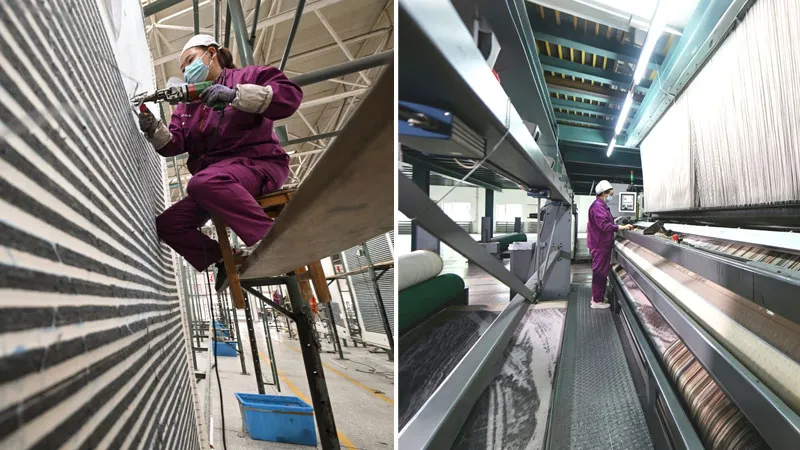
Fab Carpet runs about 1,800,000 sqm of Axminster per year. Machine & hand-made capacity is 100,000 sqm per year. Hand tufting reaches 36,000 sqm per year. That spread matters for planning. A 20,000 sqm hotel corridor package belongs on a loom. A 300 sqm ballroom feature carpet belongs on a tufting frame. Putting a loom job on a hand line wastes money and time.
Fiber Choice
Fiber sets both price and lifespan. Compare four options:
- Premium New Zealand wool: high resilience, natural soil hiding, strong appearance retention. Highest material cost.
- Wool-nylon blend: a common compromise for corridors and guest rooms.
- Solution-dyed nylon 6,6: colorfast, bleach-tolerant, easy to clean.
- Polypropylene: lowest cost, lower resilience. Suits light traffic and temporary spaces.
A note on fire claims: wool is often called naturally flame-resistant. For a project, that means nothing without a test report on the exact construction you are buying.
Pile Weight, Pile Height and Density
Two carpets of equal thickness can differ in density by 30% or more. Use this formula:
Density (oz/yd³) = (36 × face weight in oz/yd²) ÷ pile height in inches
Example: a 32 oz/yd² face weight at 0.25 in pile gives (36 × 32) ÷ 0.25 = 4,608 oz/yd³. Drop the face weight to 26 oz/yd² at the same height and density falls to 3,744. The second carpet looks identical in a sample book. After two years of traffic, it will not.
Ask every supplier for face weight, pile height and density in writing. Fab Carpet states all three on the technical data sheet before quotation.
Backing and Underlay
Backing affects acoustics, installation method and edge stability. Thicker backings and attached cushion cost more per sqm but can remove a separate underlay line from the installation budget. Match the backing to the zone, not to the whole building.
Custom Design
Custom colors need lab dips and yarn dyeing. Custom patterns need loom set-up. Both are fixed costs. Spread them over more sqm and the per-square-foot impact drops. Consolidating three similar corridor designs into one often cuts the price more than negotiating the unit rate.
Which Certifications Should a Commercial Carpet Quote Include?
A cheap quote with the wrong paperwork is the most expensive quote. Fire and indoor air documents decide whether a shipment clears inspection and whether the hotel brand approves it.
| Certification | What it proves | Typical market |
|---|---|---|
| ASTM E648 Class I | Flooring radiant panel fire performance | North America |
| EN 13501-1 Bfl-s1 | European reaction-to-fire class with limited smoke | Europe |
| EN 14041 (CE) | Harmonized performance declaration for floor coverings | EU |
| UKCA / UKMCA | Conformity for the UK market | United Kingdom |
| MED Wheelmark (IMO) | Marine equipment compliance | Cruise and marine projects |
| CRI Green Label Plus | Low VOC emissions, indoor air quality | LEED/WELL-oriented projects |
| ISO 9001 / 14001 / 45001 | Quality, environmental and safety management systems | All |
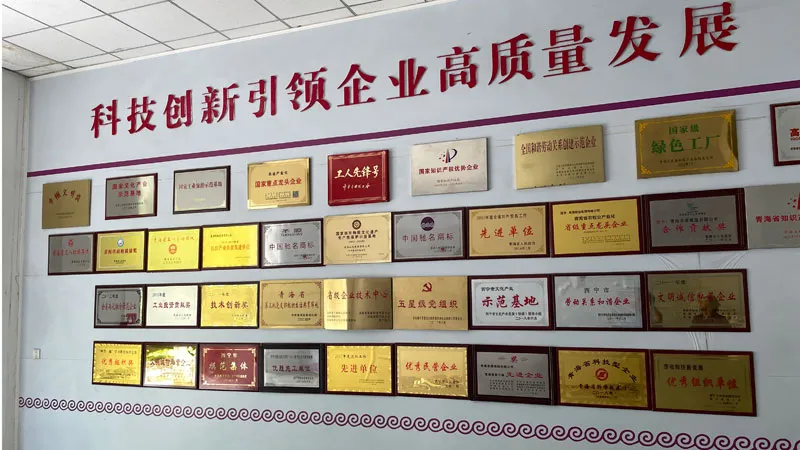
Fab Carpet holds CRI Green Label Plus (GLP9123 and GLP5308), Class I under ASTM E648, Bfl-s1, EN 14041 (CE), MED Wheelmark, UKCA / UKMCA, the three ISO systems and the AAAAA Quality Standard.
Certificates alone don’t protect you. Check three things on each one: the certificate holder, the product scope and the expiry date. A report for a nylon tufted construction does not cover an Axminster wool carpet. Ask that the test report construction match the construction on your purchase order.
You can verify Green Label Plus listings directly: CRI Green Label Plus product directory. For the test method itself, see ASTM E648 radiant panel test standard.
Acoustics and Traffic Zoning for Hotels and High-traffic Commercial Spaces
Specify by zone. A single spec for the whole building overpays in quiet areas and underperforms in busy ones.
| Zone | Traffic load | Recommended direction |
|---|---|---|
| Guest rooms | Low to medium | Axminster wool blend, cushion-backed |
| Corridors | High, rolling luggage | Dense Axminster, higher face weight |
| Lobbies and ballrooms | High, events | Dense wool or nylon, pattern chosen for wear |
| High-traffic Entertainment Venues | Very high, 18-24 hours | Maximum density, solution-dyed fiber, strict cleaning plan |
| Executive suites, boardrooms | Low | Plush pile, hand tufted details |
On acoustics, be precise. Carpet contributes to NRC (sound absorption) and to impact sound improvement (ΔLw) through pile and backing. STC describes a wall or floor assembly, and carpet only helps that assembly. A supplier who promises a specific STC from carpet alone is overselling.
Pattern repeat also hits the budget. A large repeat in a narrow corridor means pattern matching at every seam and higher wastage. Send corridor widths to your supplier early. Fab Carpet’s engineers produce a lay plan with roll numbers and seam positions before shipment.
Estimate area and wastage with the Carpet Calculator
Net Carpet Area 0.00 sq.ft
Total Carpet Required (With Waste Factor) 0.00 sq.ft
Square Yardage Equivalent 0.00 sq.yd
Waste & Cutting Allowance
Estimates generated are approximate calculations for preliminary planning. Actual roll layouts and seam placements may vary. Professional measurement recommended before ordering.
MOQ and Tiered Pricing: How Order Volume Changes Your Cost
MOQ exists because of yarn dyeing and loom set-up, not sales policy. A small run carries the same set-up work as a large one.
Fab Carpet’s MOQ is 50 sqm. Pricing is set per project, and volume is one of the inputs. We don’t use a fixed public price ladder. Each quotation reflects:
- Your total area. Set-up costs spread across more sqm, so the unit price moves with volume.
- Design complexity. Number of colors, pattern repeat and custom artwork all affect loom or tufting time.
- Number of colorways and zones. Fewer variants mean fewer changeovers.
- Delivery schedule. One consolidated order schedules more efficiently than several releases.
- Trade term. FOB, CIF and DDP price different layers of the chain.
If your project is close to a volume break, tell us. We can price two scenarios side by side, for example a single consolidated order versus phased releases, so you see the effect before you commit.
Three levers usually lower your per-sqm cost: fewer colorways, a shared pattern across zones and a single consolidated order. Ask for the quotation validity period in writing, since raw material costs move.
Axminster carpet manufacturing process and pricing
Hidden Costs and Total Cost of Ownership
Budget the whole chain. Missing line items are the usual cause of overruns.
Landed costs: ocean freight, cargo insurance, import duty, port charges, customs broker fees, inland haulage.
Installation costs: removal of old flooring, subfloor leveling, moisture testing, adhesive or grippers, underlay, overtime or night work, wastage.
Then apply the ownership formula:
TCO = Purchase + Freight/Duty + Installation + Maintenance + Replacement − Residual Value
A carpet that is 20% cheaper but lasts five years instead of ten doubles your replacement and re-installation spend. Closing a hotel floor for a second renovation also costs revenue. Specify for the expected cycle, not the opening day.
Factory-direct supply removes the distributor layer. Your price reflects materials, labor and margin at the source. The trade-off is that you manage import logistics or appoint a forwarder. For DDP orders, Fab Carpet’s team coordinates delivery to the project address.
Supply Chain Pitfalls: Where Carpet Projects Go Wrong
Each risk below has a prevention step.
- Sample and bulk mismatch. Approve a signed sample and keep a sealed reference. Fab Carpet retains a matching reference for bulk comparison.
- Dye-lot variation. Require a single dye lot per area, or document the lot split and layout.
- Trader presented as factory. Ask for the factory address, loom or tufting line photos and a business license.
- Vague specification. Fiber, face weight, density and backing must appear on the PO.
- Fire report mismatch. The tested construction must equal the supplied construction.
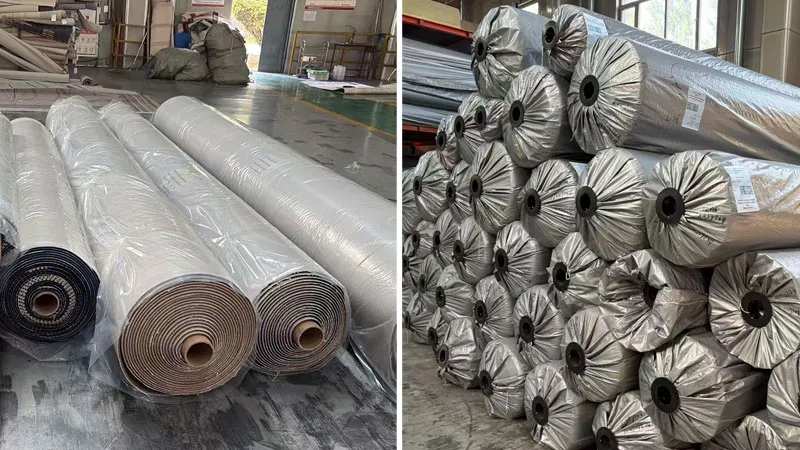
- Moisture damage in transit. Specify moisture-barrier wrapping for rolls and sealed container loading.
- No production milestones. Ask for dated checkpoints: yarn, weaving, finishing, packing.
- Unclear warranty. Get coverage and exclusions in writing before payment.
How to Vet a Carpet Manufacturer: A Qualification Checklist
Ask these six questions before you issue an RFQ:
- Do you own the looms and tufting lines? Can I see them on a video call?
- What is your annual capacity by construction type?
- Which certificates cover the exact product I’m buying?
- Can you share three comparable project references?
- Do you allow third-party inspection by SGS or BV before shipment?
- What does the warranty card cover and exclude?
Watch for red flags: vague answers on capacity, certificates held by a different company, prices that ignore your specification and no written lead-time commitment.
Fire rating and certification guide for hotel carpet
From RFQ to Installation: A Realistic Timeline
| Stage | Typical duration | Notes |
|---|---|---|
| RFQ and spec confirmation | Days | Share area, zones, fire and market requirements |
| Paid sampling | About 7 days | Sample fee is credited in full against the bulk order |
| Sample approval and sealing | Client-dependent | Approve before production starts |
| Bulk production | About 35 days | Schedule varies with volume and pattern |
| Pre-shipment QC / third-party inspection | Few days | SGS or BV on request |
| Packing, loading, sea freight | Route-dependent | Moisture-protected rolls |
| Installation | Site-dependent | Roll numbers and lay plan supplied |
Plan backwards from the installation date. Add a buffer for customs and a second buffer for site readiness. Most delays come from late approvals, not from the loom.
Frequently Asked Questions
What is the minimum order quantity for custom commercial carpet?
Fab Carpet’s MOQ is 50 sqm. This applies to custom designs across our Axminster, hand tufted, hand knotted and machine & hand-made ranges.
Which materials and certifications are available?
We produce in Premium New Zealand wool, wool-nylon blends, nylon and polypropylene. Documentation includes Class I (ASTM E648), Bfl-s1, EN 14041 (CE), CRI Green Label Plus (GLP9123 and GLP5308), UKCA / UKMCA and MED Wheelmark. Confirm that the certificate scope matches your chosen construction.
Can you match custom sizes, patterns and colors?
Yes. We support OEM/ODM work, custom colors via lab dips and custom patterns across all four construction methods. Send your artwork or Pantone references with the RFQ.
What is the commercial carpet cost per square foot from Fab Carpet?
We price each project to your specification, so we don’t publish a single rate. The price depends on construction, fiber, face weight, density, backing, design, order volume and Incoterm. Send your requirements with an RFQ and we’ll return a written quotation. To convert our per-sqm quote to per sq ft, divide by 10.764.
How does the sample policy work?
Samples are paid. The sample fee is credited in full against your bulk order once you proceed. This keeps technical resources focused on real projects.
How long does sampling take?
About 7 days for production of the sample. Courier time is additional and depends on destination.
What is the bulk lead time?
About 35 days from approved sample and confirmed order. Very large volumes or complex patterns may adjust that. Your schedule is confirmed in writing at order.
Which trade terms do you offer, and how is the carpet protected?
FOB, CIF and DDP. Rolls are wrapped for moisture and damage protection and loaded into sealed containers. Compare quotes only on the same Incoterm.
What are the payment terms?
The standard arrangement is a 50% deposit and a 50% balance, with the balance arranged around shipment documents. Terms for larger programs can be discussed in the quotation.
Do you support third-party inspection, and how are claims handled?
We support pre-shipment inspection by SGS or BV. Quality claims need photos, batch or roll numbers and installation records. All products carry a 5-year warranty, with coverage and exclusions defined on the warranty card.
Get Your Project Pricing From the Source
Compare quotes on the same layer, the same specification and the same Incoterm. That one step removes most budget surprises.
- Request free sample swatches to confirm color and hand.
- Submit an RFQ with your area, zones and market requirements. We price to your specification, and you receive a written quotation with the Incoterm stated.