Call us now:

How to get new carpet smell out is not a weekend chore when the order covers 300 hotel rooms, not 300 square feet. A guest complaint on move-in day, a stalled HVAC handover, or a fire-rating document that arrives late can each blow a renovation schedule apart. This guide breaks down the VOC science, the certifications that actually matter, and the sourcing decisions that stop odor problems before they reach the job site.
Why New Carpet Smells: The VOC Science Procurement Teams Should Understand
The smell comes from volatile organic compounds released during manufacturing — mainly from synthetic fibers, latex backing, and adhesives. This process, called off-gassing, peaks in the first 72 hours and tapers off over the following weeks. Homeowners can wait it out with an open window. A commercial buyer cannot: the room block has a check-in date, and the general contractor has a punch list deadline.
Fiber choice changes the odor profile before installation even starts. Synthetic fibers like nylon carry more residual chemistry from extrusion and dyeing. Premium New Zealand Wool, by contrast, is a natural protein fiber processed with far fewer synthetic additives, which measurably lowers baseline VOC emissions.

Synthetic vs Natural Fiber: Off-Gassing at a Glance
| Fiber Type | Typical VOC Load | Odor Duration | Common Use Case |
|---|---|---|---|
| Nylon (synthetic) | Moderate to high | 1–3 weeks | Budget commercial, high-wear zones |
| Polyester (synthetic) | Moderate | 1–2 weeks | Retail, low-traffic areas |
| Premium New Zealand Wool | Low | Days, not weeks | Hospitality, boutique hotels, executive floors |
This isn’t a reason to avoid synthetics outright — they have their place on cost-sensitive projects. It’s a reason to specify fiber type based on the room’s function and the client’s tolerance for odor complaints.
Which Certifications Actually Matter for Commercial Carpet Projects
A homeowner blog will tell you to look for a “low-VOC label.” A procurement director needs to know which label, tested by whom, recognized where.
CRI Green Label Plus (GLP9123 / GLP5308) remains the reference standard in North America. It tests total VOC emissions under controlled conditions and is recognized by the EPA’s federal purchasing guidelines. CRI Green Label Plus program details
EN 14041 (CE Marking) governs resilient, textile, and laminate floor coverings across the EU and UK-adjacent markets. Any project shipping into Europe needs this documentation before customs clearance, not after.
MED Wheelmark, the IMO marine equipment standard, applies to cruise ships, ferries, and offshore hospitality builds. It’s a narrower certification, but skipping it on a marine project means a rejected shipment at port.
UKCA / UKMCA replaced CE marking for goods placed on the UK market post-Brexit. Suppliers still quoting CE-only compliance for UK-bound orders are creating a paperwork gap that customs will catch.
Fire performance is part of the same conversation, because fire codes and indoor air quality requirements are often reviewed together during project approval. Class I Fire Rating (ASTM E648 / Bfl-s1) is the baseline most hotel and public-space specifications require for corridors and common areas.
Certification Requirement Matrix
| Project Type | Region | Certifications Typically Required |
|---|---|---|
| Hotel renovation | North America | CRI GLP, ASTM E648 Class I |
| Corporate office | EU | EN 14041, Bfl-s1 |
| Cruise / marine hospitality | Global | MED Wheelmark, IMO fire standards |
| Retail / government contract | UK | UKCA, EN 14041 |
Fab Carpet’s production line holds CRI Green Label Plus (GLP9123 / GLP5308), EN 14041, MED Wheelmark, UKCA/UKMCA, and ISO 9001/14001/45001 certification concurrently — which matters when a single order ships to a US hotel group and a European franchise partner under one purchase agreement. One factory audit trail covers both markets instead of two separate supplier relationships.
How to Get New Carpet Smell Out During Installation — Commercial-Scale Ventilation
Opening a window works in a bedroom. It does not work across a 40-room floor being installed on a rolling schedule.
Phased Installation and Room-Block Scheduling
Sequence installation by wing or floor, not by convenience. Close off freshly carpeted rooms from guest-facing corridors for the first 48–72 hours, and stagger the punch-list walkthrough so inspectors aren’t standing in peak off-gassing zones.
Coordinate With HVAC Commissioning
Run the building’s mechanical ventilation on continuous cycle, not automatic, during the installation window. This is a five-minute conversation with the mechanical contractor that most flooring schedules never have — and it’s the single biggest lever for clearing VOCs across a large floor plate quickly.
Factory-Side Pre-Shipment Airing
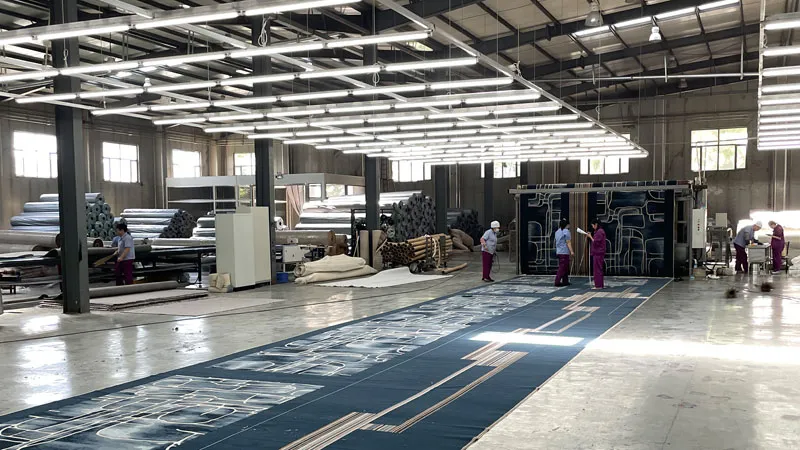
Odor management should start before the container leaves the port, not after it’s unrolled on-site. Fab Carpet runs a warehouse airing period post-production and pre-packaging, which reduces the concentration of trapped VOCs before the product ever reaches the job site. It’s a small step in the manufacturing sequence, but it removes a variable that no amount of on-site ventilation can fully compensate for.
Material Deep-Dive: Construction Method, Density and What They Predict
Odor is only one variable. Wear life, acoustic performance, and maintenance cost are the ones that show up in a five-year facilities budget.
Axminster, Hand Tufted, Hand Knotted: Know the Trade-offs
Axminster carpet is woven on a loom, patterned, and built for consistent high-traffic performance — the standard choice for hotel corridors and ballrooms. Hand tufted carpet allows faster turnaround and design flexibility for feature areas. Hand knotted carpet delivers the highest durability and the most refined hand-feel, at a longer lead time, and typically the lowest VOC output of the three because of its construction process.
Pile Weight, Pile Height and Density: The Numbers That Predict Wear Life
Density is the product of pile weight and pile height, inversely — higher face weight packed into a shorter pile generally outperforms a taller, lighter pile in high-traffic zones. A rough working formula procurement teams can use when comparing quotes:
Density Factor = (Pile Weight in oz/yd²) ÷ (Pile Height in inches)
A higher number generally correlates with better crush resistance in corridors and lobbies. Ask any supplier for this figure alongside the fire rating — if they can’t produce it, that’s a sourcing red flag, not a rounding error.
Physical Performance Comparison
| Construction | Abrasion Resistance | Acoustic Absorption (NRC) | Fire Rating | Odor Profile |
|---|---|---|---|---|
| Axminster | High | Moderate | Class I (ASTM E648) | Low–Moderate |
| Hand Tufted | Moderate–High | Moderate–High | Class I (Bfl-s1) | Moderate |
| Hand Knotted | Very High | High | Class I | Low |
Compare wool vs synthetic fiber performance
Estimate your project’s ideal pile density and material cost
Supply Chain Pitfalls That Cause Odor Complaints and Delivery Delays
Most persistent odor complaints trace back to one of two things: the adhesive, or the supplier.
Cheap adhesive sourcing is the most common hidden cause. A carpet can carry a valid Green Label Plus certificate while the installer’s separately-sourced adhesive doesn’t meet any VOC threshold at all. Specify the adhesive standard in the same purchase order as the carpet, not as an afterthought for the install crew.
Supplier vetting should happen before the contract, not after the container ships. Ask for: current test reports (not expired ones), batch-to-batch consistency data, and — if the order size justifies it — a factory audit or third-party inspection report.
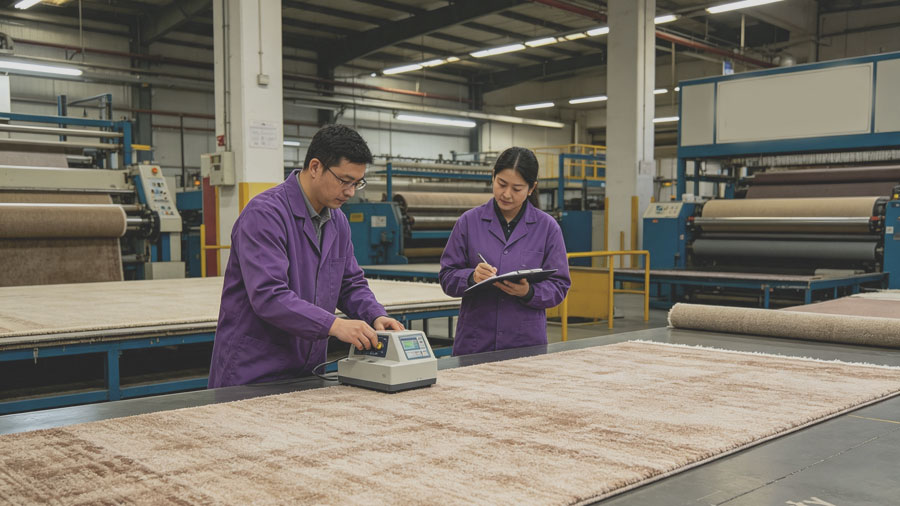
MOQ and tiered pricing structures reward buyers who understand where the markup sits. Going through a trading company typically adds 20–30% in intermediary margin on top of factory cost, along with an extra communication layer that slows down change requests and QC feedback. Working directly with the manufacturer — such as Fab Carpet’s OEM/ODM program out of Qinghai, China — removes that markup and puts the buyer in direct contact with the QC team responsible for the actual product, not a sales intermediary relaying information secondhand.
Factory-Direct vs Trading Company vs Local Distributor
| Sourcing Route | Typical Cost Premium | Lead Time Control | QC Transparency |
|---|---|---|---|
| Factory-Direct (OEM/ODM) | Baseline | Direct | Full batch traceability |
| Trading Company | +20–30% | Indirect | Limited |
| Local Distributor | +30–50% | Indirect | Minimal |
Learn how our OEM/ODM process works
Long-Term Maintenance and Odor Prevention
Cleaning protocols matter more on a commercial contract because a warranty void on a 500-unit order is a very different cost than on one household carpet. Follow the manufacturer’s approved cleaning method by fiber type — wool and synthetic fibers respond differently to pH-balanced cleaners, and using the wrong one voids coverage.
Build a preventive maintenance schedule around actual foot traffic data, not a fixed calendar. Corridors and lobbies need attention on a different cycle than executive suites. Hand-knotted and Axminster constructions generally carry a longer maintenance interval and lower lifetime cost per square foot despite a higher upfront price — a detail that rarely survives a lowest-bid comparison but matters over a ten-year hold period.
Red Flags: When It’s Not Normal Off-Gassing
Normal VOC odor fades steadily and noticeably within one to two weeks. If it doesn’t — or if the smell shifts from chemical to musty — stop and investigate. That shift usually points to trapped moisture under the padding or subfloor, not the carpet itself.
Document the timeline, take samples if possible, and request the supplier’s original test report against the batch number on the delivered product. A supplier with proper batch traceability — the kind built into an ISO 9001-certified production line — can confirm within days whether the material matches its certification, or whether something changed between testing and shipping.
ISO 9001 quality management requirements
FAQ: Commercial Carpet Sourcing and Odor Management
What’s the MOQ for OEM/ODM custom carpet orders?
MOQs vary by construction method — machine-made Axminster typically requires a lower minimum than hand-knotted product, which needs more loom time to justify setup. Request a project-specific quote for exact figures.
How long does sample swatch delivery take?
Standard stock swatches usually ship within a few business days. Custom color-matched or pattern samples take longer, since they go through a mini production run before dispatch.
What’s the typical sea freight lead time for a hotel-scale order?
Ocean freight from a Chinese manufacturing hub to North America or Europe generally runs 25–40 days depending on port and season, on top of production time — plan procurement timelines backward from the installation date accordingly.
Can you provide fire rating test reports before we sign a contract?
Yes — ASTM E648 and Bfl-s1 test reports should be available on request before any purchase order is finalized, not promised for after shipment.
Does wool carpet really off-gas less than synthetic carpet?
Generally, yes. Wool’s natural protein structure requires fewer synthetic processing chemicals than nylon or polyester, which typically results in lower measured VOC emissions and a shorter odor window after installation.
Do you support private label or custom branding for hotel groups?
Yes — OEM/ODM programs typically include private labeling, custom pattern development, and color matching against a client’s design specification.
Get Compliance Documentation Before You Sign the Next Purchase Order
A carpet that smells fine at delivery and performs for a decade is the result of decisions made before it ships — fiber selection, certification, and who you’re buying from. If you’re evaluating suppliers for an upcoming hotel, office, or marine project, start with the numbers, not the sales pitch.
Request free sample swatches, submit an RFQ, or download the technical data sheet (TDS) for our certified constructions to compare against your current supplier’s paperwork.