Call us now:

Why are carpets so expensive on a commercial quote versus a retail showroom tag? The gap usually comes down to three line items buyers overlook: fire-rating certification, tested wear performance, and factory QC control. Skip any one of these, and a “cheap” carpet costs far more once a hotel fails inspection or a corridor wears out in year two. This guide breaks the real cost structure down, line by line.
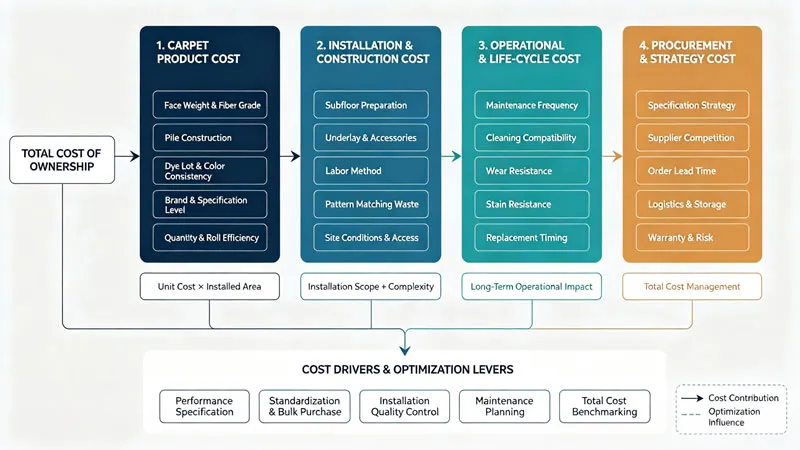
The Real Cost Structure of a Commercial Carpet — Beyond “Material and Labor”
Retail pricing logic doesn’t transfer to commercial procurement. A homeowner compares fiber and thickness. A procurement director has to price four separate layers: raw material, construction labor, compliance testing, and logistics.
Compliance testing alone can add 8-15% to landed cost — flame testing, VOC testing, and third-party lab verification aren’t optional line items on a hotel or marine project, they’re gate requirements before the carpet ever ships.
| Cost Layer | Hotel Guestroom | Ballroom / Lobby | Marine Cabin |
|---|---|---|---|
| Raw Material | 40-45% | 35-40% | 30-35% |
| Construction Labor | 25-30% | 30-35% | 25-30% |
| Compliance & Testing | 8-12% | 10-15% | 15-20% |
| Logistics & Duties | 10-15% | 10-15% | 15-20% |
Most trading companies mark up each of these layers separately, then add their own margin on top. Sourcing directly from a factory — Fab Carpet included — removes one full markup tier, which is typically where buyers recover that 20-30% often lost to middlemen on large-volume orders.
Material Deep-Dive — What Actually Drives Fiber Cost
Wool carpet cost isn’t about “wool versus synthetic.” It’s about grade and micron count, and almost no supplier discloses either on a spec sheet.
Premium New Zealand wool runs a coarser, more resilient fiber than lower-grade blends. That coarseness is exactly what gives it better crush recovery and stain resistance under repeated foot traffic. Cheaper wool blends look identical on a swatch card and fail within three years in a lobby.
| Fiber Type | Wear Rating | Flame Behavior | Underfoot Feel | Lifecycle Cost |
|---|---|---|---|---|
| Premium NZ Wool | Excellent | Naturally flame-resistant | Superior | Low (10+ yr) |
| Standard Wool Blend | Good | Moderate | Good | Medium |
| Nylon (Commercial Grade) | Very Good | Requires treatment | Fair | Medium |
| Silk Blend | Poor (high traffic) | Requires treatment | Excellent | High |
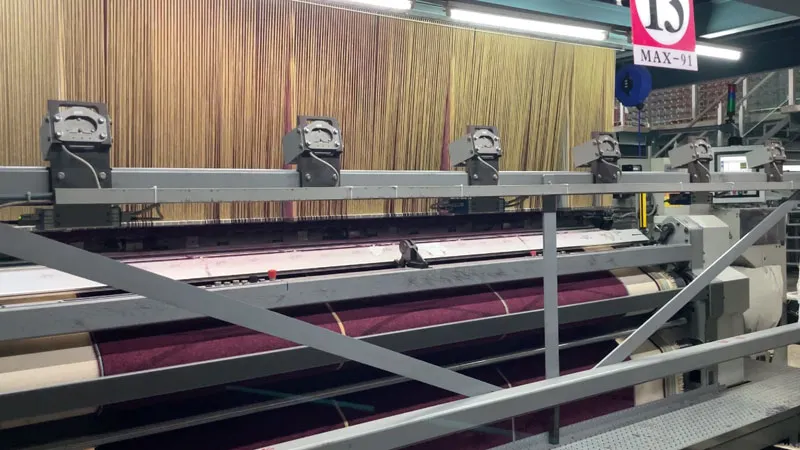
Fab Carpet sources New Zealand wool directly and runs micron and tensile-strength testing on every incoming batch before it reaches the loom. That’s a factory-floor step most buyers never see — and the reason a spec sheet without lab data should raise questions, not confidence.

Construction Methods — Axminster, Hand-Tufted, Hand-Knotted & Machine-Made Compared
Construction method decides whether a carpet holds pattern and density across a 500-room order or starts drifting by room 200.
Axminster weaving locks each tuft into the backing during production, which is why it dominates large hospitality contracts — ballrooms, corridors, casino-adjacent lounges (referred to here as high-traffic entertainment areas), and any space needing bold, repeatable pattern at scale.
Hand-tufted carpet costs less than hand-knotted and suits feature areas or boutique properties where design flexibility matters more than 20-year durability.
Hand-knotted remains the highest labor input and the highest price point — justified only where longevity and prestige outweigh budget.
| Method | Unit Cost | Lead Time | Density Control | Best Fit |
|---|---|---|---|---|
| Axminster | Medium | 6-8 weeks | High, batch-consistent | Corridors, ballrooms |
| Hand-Tufted | Medium-Low | 4-6 weeks | Moderate | Boutique / feature rooms |
| Hand-Knotted | High | 12-20 weeks | Variable | Heritage / luxury suites |
| Machine-Made | Low | 3-5 weeks | High | Back-of-house, budget zones |
Fab Carpet runs parallel Axminster and hand-tufting lines specifically so a 300-room order arrives with the same density and colorway from the first roll to the last — the detail that gets flagged during on-site QC if a supplier can’t hold it.
The Compliance Layer Nobody Talks About — Why Certification Adds Cost (and Removes Risk)
This is where most buyer guides stop short, and where rejected shipments actually happen.
Fire safety: US and hospitality projects generally require Class I fire rating under ASTM E648, while EU projects reference Bfl-s1 under the Euroclass system. A carpet without third-party test documentation isn’t non-compliant by default — it’s untested, which is worse, because no inspector will approve it on trust.
Marine projects need MED Wheelmark certification under IMO standards — non-negotiable for cruise and yacht interiors.
Indoor air quality: CRI Green Label Plus (GLP9123 / GLP5308) affects LEED point eligibility, which procurement teams on green-certified builds can’t skip.
Market access: EN 14041 covers CE marking for EU distribution; UKCA/UKMCA covers the UK post-Brexit.
| Market / Project Type | Required Certification |
|---|---|
| US Hospitality | ASTM E648 Class I |
| EU Commercial | EN 14041 (CE), Bfl-s1 |
| UK Market | UKCA / UKMCA |
| Marine / Cruise | MED Wheelmark (IMO) |
| LEED-Certified Builds | CRI Green Label Plus |
Fab Carpet holds ASTM E648, EN 14041, MED Wheelmark, and CRI GLP certification across its product lines, plus ISO 9001/14001/45001 for quality, environmental, and safety management. One factory covering multiple market entry requirements means fewer approval delays — and fewer surprises during a hotel’s fire marshal walkthrough.
Verify current listings
Review flame testing methodology
Performance Metrics That Determine Total Cost of Ownership (TCO)
Upfront price and true cost rarely match. A cheaper carpet that fails at year four costs more than a premium carpet lasting twelve.
Wear resistance: Martindale and Wyzenbeek tests simulate foot traffic cycles. Commercial corridors need a minimum Martindale rating of 25,000+ cycles; back-of-house areas can run lower.
Acoustic performance: NRC and STC ratings matter directly for guestroom corridors stacked above meeting rooms — a low-NRC carpet means noise complaints on floor two.
| Metric | Budget Carpet | Premium Wool Carpet |
|---|---|---|
| Expected Lifespan | 3-5 years | 10-15 years |
| Replacement Cycles (10 yr) | 2-3 | 0-1 |
| Total Labor + Disruption Cost | High (repeat installs) | Low |
| Guest Complaint Rate (Acoustic) | Higher | Lower |
Run the ten-year math before comparing quotes on price per square meter alone.
Compare wool grades side-by-side
Supply Chain Risk — The Sourcing Mistakes That Cost More Than the Carpet Itself
Most cost overruns don’t come from the carpet. They come from the supplier relationship.
Sample-to-bulk mismatch is the most common failure point: a factory sends a beautiful sample, then ships a bulk order with a different dye lot or pile density. Without documented QC checkpoints between sampling and mass production, buyers have no recourse once the container lands.
Vet the factory before the PO, not after:
- Request third-party audit reports, not just certificates
- Ask for the actual test lab that issued fire-rating documents
- Confirm who owns the loom — subcontracted production hides quality variance
- Check MOQ tiers against your actual project volume before locking pricing
| Trading Company | Factory-Direct (Fab Carpet) | |
|---|---|---|
| Price Transparency | Low (hidden margin) | High |
| QC Control | Indirect | Direct, in-house |
| Communication Speed | Slower (relay) | Direct |
| Lead Time Risk | Higher | Lower |
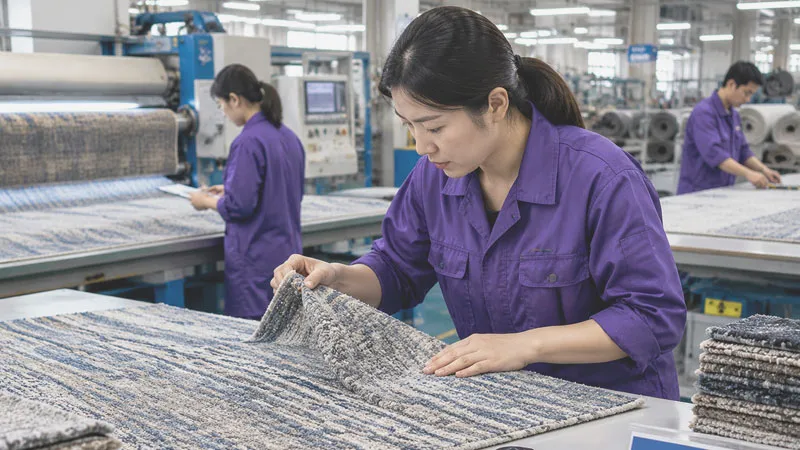
Fab Carpet runs AAAAA-standard inspection at three checkpoints — raw material intake, mid-production, and pre-shipment — specifically to catch the sample-to-bulk gap before it reaches a client’s dock.
Estimate Your Project Cost Before You Request a Quote
Rather than waiting on a formal RFQ cycle, run your project parameters — square meters, construction method, and certification needs — through the calculator below for a working budget range.
Interactive Tool: Carpet Calculator
Explore certified fiber options
How to Choose the Right Supplier — A Decision Framework for Procurement Teams
Filter for compliance first. Price negotiations mean nothing if the product can’t clear customs or pass a fire inspection.
- Confirm certification documents match your specific market (US ≠ EU ≠ marine)
- Request test lab reports, not marketing claims
- Ask about OEM/ODM capability if the project needs custom colorways or branding
- Map their MOQ and lead time against your project timeline before design lock
Fab Carpet’s OEM/ODM process runs design intake, sampling, certification cross-check, then bulk production with fixed lead-time commitments — structured specifically so architects aren’t guessing at delivery dates mid-project.
FAQ — Commercial Carpet Cost & Compliance Questions
Why is Axminster carpet more expensive than machine-made carpet?
Axminster locks pattern and pile into the backing during weaving, giving tighter density control across large orders. Machine-made carpet uses simpler tufting, which costs less but shows more wear variance over time.
What fire rating is required for hotel corridor carpet in the US?
Most US hospitality projects require Class I fire rating under ASTM E648. Confirm the specific requirement with your local fire marshal, as some jurisdictions add stricter local codes.
What’s a typical MOQ for custom hospitality carpet from a factory?
MOQs vary by construction method — Axminster typically starts higher than hand-tufted due to loom setup costs. Request tiered pricing based on your project’s total square meterage.
Does CRI Green Label Plus affect LEED certification scoring?
Yes. CRI Green Label Plus (GLP9123/GLP5308) products contribute toward indoor air quality credits under LEED, which matters directly for green-certified builds.
How long does hand-tufted commercial carpet last in high-traffic areas?
Typically 10-15 years with proper wool grade and maintenance, though high-traffic entertainment areas and main corridors may see faster wear without a protective finish.
What’s the difference between EN 14041 and UKCA certification?
EN 14041 covers CE marking for EU market distribution. UKCA/UKMCA is the separate post-Brexit equivalent required for UK market access — a product needs both if selling into both regions.
Get Your Project Quoted
Pricing a carpet correctly means pricing the risk behind it — compliance gaps, wear failure, and supply chain delays all cost more than the fabric itself.
Request free sample swatches, submit an RFQ, or download the technical data sheet (TDS) for certification records to compare against your project spec before committing to a supplier.